
 Image 1 of 1
You know the moment.
You overthink the conversation. Second-guess the decision. Say yes when you wanted to say no. Shut down, over-explain or react in a way you later wish you hadn't.
And afterwards, you wonder: Why do I keep doing that?
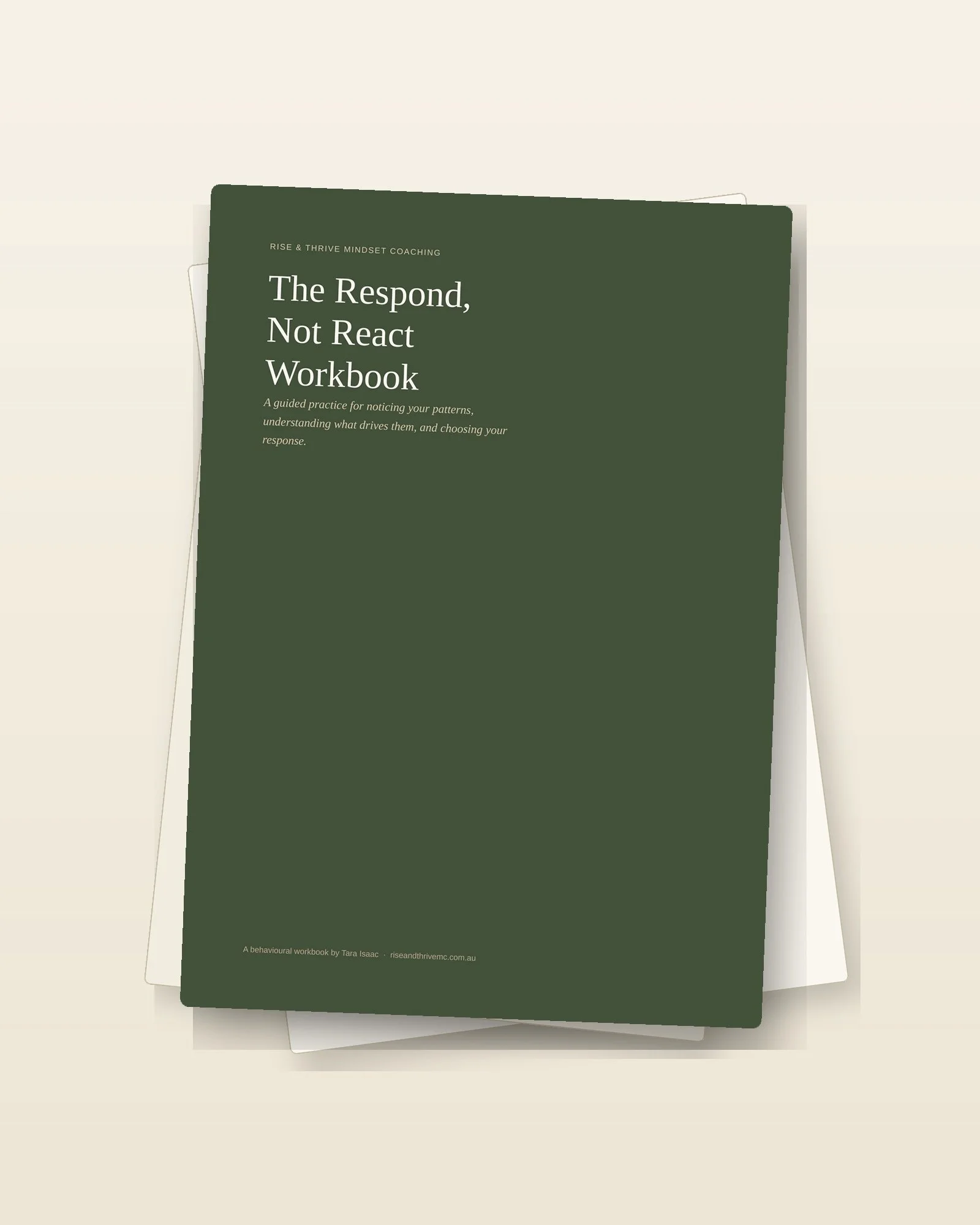
The Respond, Not React Workbook is a guided behavioural change workbook designed to help you look beyond the reaction itself and get curious about what may be driving it.
Rather than simply telling yourself to “do better next time”, you'll work through one real situation to identify the pattern, explore the beliefs that may sit underneath it and practise creating a different response.
Notice the moments that trigger an automatic response
Recognise patterns such as overthinking, people pleasing, avoidance, perfectionism and shutting down
Explore the beliefs that may be influencing your behaviour
Use a simple three-step pause practice when the pattern appears
Question automatic thoughts and create a more considered perspective
Explore what could become possible if the old pattern wasn't making the decision for you
Track what you're noticing, choosing and learning over time
You don't need to work on everything.
Start with one pattern.
Because when you understand more about what's driving your response, you give yourself more opportunity to choose what happens next.
A 10-page fillable digital PDF workbook that you can complete directly on your device and save as your own copy.
For personal reflection and educational purposes. This workbook is not a substitute for psychological or medical care.
You know the moment.
You overthink the conversation. Second-guess the decision. Say yes when you wanted to say no. Shut down, over-explain or react in a way you later wish you hadn't.
And afterwards, you wonder: Why do I keep doing that?
The Respond, Not React Workbook is a guided behavioural change workbook designed to help you look beyond the reaction itself and get curious about what may be driving it.
Rather than simply telling yourself to “do better next time”, you'll work through one real situation to identify the pattern, explore the beliefs that may sit underneath it and practise creating a different response.
Notice the moments that trigger an automatic response
Recognise patterns such as overthinking, people pleasing, avoidance, perfectionism and shutting down
Explore the beliefs that may be influencing your behaviour
Use a simple three-step pause practice when the pattern appears
Question automatic thoughts and create a more considered perspective
Explore what could become possible if the old pattern wasn't making the decision for you
Track what you're noticing, choosing and learning over time
You don't need to work on everything.
Start with one pattern.
Because when you understand more about what's driving your response, you give yourself more opportunity to choose what happens next.
A 10-page fillable digital PDF workbook that you can complete directly on your device and save as your own copy.
For personal reflection and educational purposes. This workbook is not a substitute for psychological or medical care.